Last fall, Mother Nature was brutal to many North Carolina towns and cities. Torrential rains from Hurricane Helene overwhelmed rivers that washed away roads, homes
and entire downtown commercial districts, particularly in the western part of the state. Scenes of devastation filled news reports for weeks as residents of places such as
Asheville, Chimney Rock and Hendersonville had to dig their way through mud and
debris, while other parts of the state were literally cut off from the outside world.

Recovery efforts are still underway and lingering flood damage easy to see in many mountain communities. However, the natural beauty of North Carolina is returning, piece by piece. Many Carolina towns and destinations are about a six- or seven-hour drive from Jax, not too far for a weekend getaway, trading Northeast Florida’s flat landscapes for dramatic mountain vistas. Expect cool days and chilly evenings. But that’s what they make fireplaces for, right?
So, this fall, pack your favorite sweaters and pairs of boots, fill the gas tank, maybe stop at Buc-ees for some Beaver Nuggets and jerky, and head north this season. Following are just a few of the places worth the drive and exploration.
BEECH MOUNTAIN
In 2024, fall was cut short on Beech Mountain, the highest town in Eastern America at 5,506 feet. Typically the first area to receive fall colors in the Southeast, the town is bouncing back with its signature slate of outdoor adventure and natural beauty. One of the most popular scenic drives is the famed Blue Ridge Parkway. Those wanting to do more than stretch their legs and leap into an active mountain getaway should exit at milepost 305.1 to experience Beech Mountain.

Hiking trails are nearly too numerous to count in this slice of western North Carolina, lacing through thousands of acres of forest, past hidden waterfalls and stunning mountain lakes. For a fast and more intense thrill, mountain bikers can pedal the seven miles of cross country trails with names like Ruby Slippers and Witch’s Backbone in the Emerald Outback nature park. The area has two lakes popular for kayakers and anglers, Lake Coffey and Buckeye Lake. Fishing licenses are required for anyone over the age of 16 and are available for purchase on Beech Mountain at Fred’s General Mercantile Store, which also has tackle and bait for sale. The Beech Mountain Resort’s chairlift whisk bikers up to the summit during summer and into fall, giving way to skiers when the snow starts to fall. Opening day for the winter season is slated for November 22.

Just a four-mile ride away is the town of Banner Elk, host of the annual Wooly Worm Festival. The two-day event, October 18 and 19, takes place on the town’s downtown green and includes all the things we love about small town fairs—hot foods, arts and crafts vendors, music and kids activities. Plus, making this fest stand apart from the others are the Wolly Worm races. Entry is open to all and worms are available for purchase on site. Also on the local annual calendar is an outdoor Holiday Market on November 29 and the New Year’s Eve celebration with fireworks over the mountain on December 31.
BRYSON CITY
In many parts of the Carolina mountains, autumn unfolds in waves of colors that cascade down ridges and into the valleys throughout the season. In early October, temperatures in the highest elevations start dropping and the foliage transitions from verdant greens to brilliant yellows, reds, oranges and even purples. This visual spectacle continues into the lower elevations as the days and nights grow colder, usually until mid-November. The long leaf-peeping season means several weeks to enjoy the autumnal beauty.

Tucked against an entrance to Great Smokey Mountains National Park is Bryson City, a tiny town that welcomes visitors year-round because of its proximity to outdoor adventures of every kind. Among the leading lures here at this time of year is the Great Smokey Mountains Railroad “Fall Foliage” ride, a leisurely way to soak in beautiful mountain scenery while being transported through valleys painted in brilliant autumn colors. For adult adventures, check out the Carolina Moonshine Experience, Smokey Mountain Beer Run and Uncorked Wine Trains. Passengers savor potent libations and soak in nature’s palette rolling along the tracks, past flowing rivers and rustic outposts.
For some of the region’s most special autumn vistas, head to the Blue Ridge Parkway’s many overlooks including Waterrock Knob and Graveyard Fields. The Oconaluftee Valley Overlook along Newfound Gap Road offers layers of mountain ridges and makes for a great spot for photos at sunrise. If weather permits, hikes through Deep Creek in the national park lead to picturesque streams and waterfalls.

Back in town, a small but tasty craft beer scene compliments the crisp mountain air. For example, Bryson City Brewing pours 14 beers on tap in a family friendly setting with an outdoor space ideal for watching fall football. Mountain Layers Brewing Company rests along the Tuckasegee River offering waterfront and town views from its rooftop deck and serving brews such as Hazel Creek Blonde Ale and Whaddayear Wit made with water that comes directly from the Great Smoky Mountain National Park.
WINSTON-SALEM
Thanks to its Piedmont location, leaf season typically stretches a week or two beyond the mountain peak, making the Winston-Salem region ideal for those who missed the Blue Ridge show but still have a hankerin’ for a fall foliage fix. With a blend of natural beauty, historic charm and quirky Carolina experiences, Winston-Salem is an affordable destination that often doesn’t spring to mind come autumn.
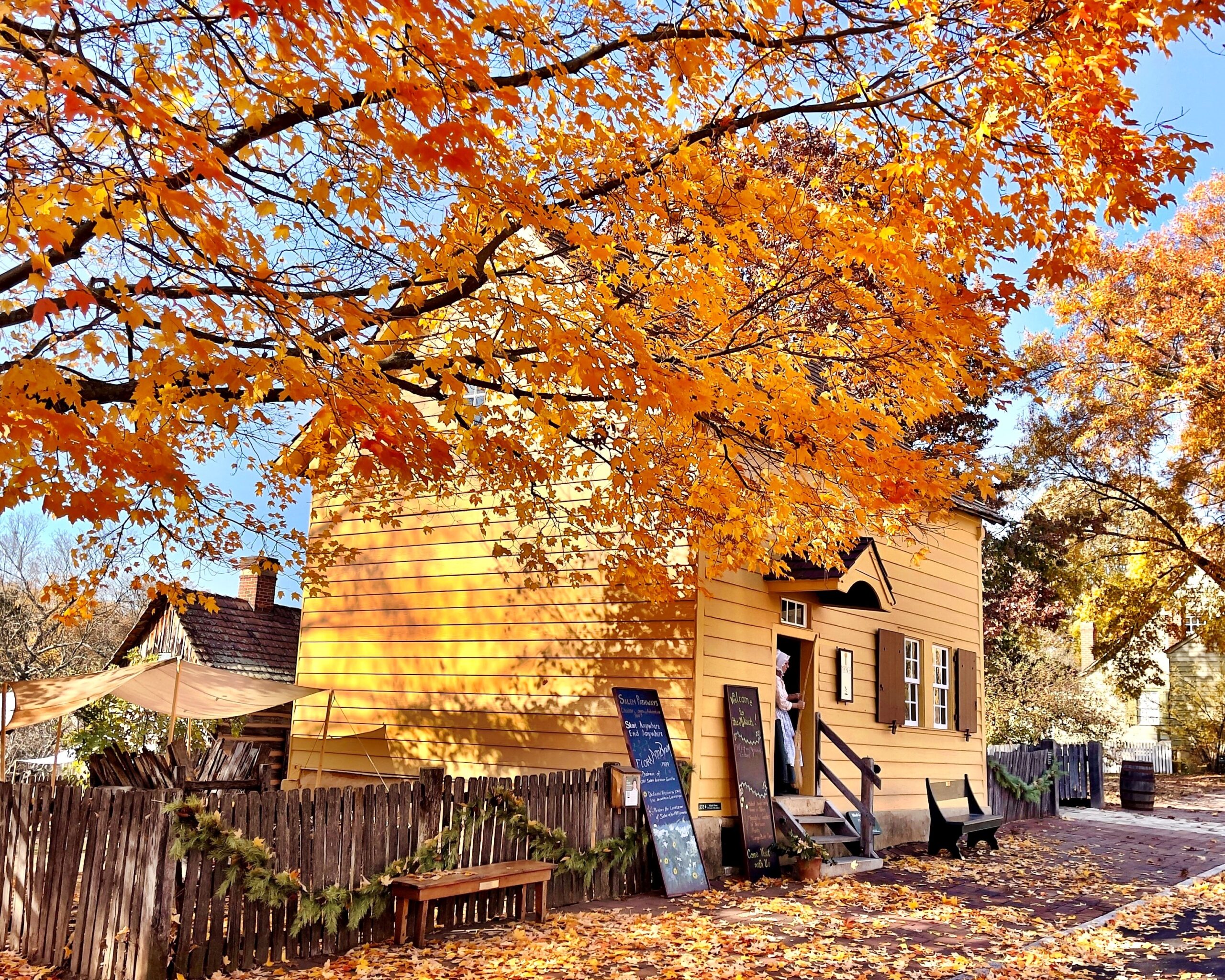
The Old Salem Museums & Gardens is a historic site that tells the stories of people living in the region going back centuries. Kind of like Plymouth or James Town for the Carolinas, the property is a collection of attractions, historical collections, and decorative arts designed to share the diverse cultural history of the early South, with special emphasis on the Moravians in North Carolina, enslaved and free people of African descent, and Indigenous peoples of the Southern Woodland. For example, the Museum of Early Southern Decorative Arts (MESDA) houses an enormous collection of decorative arts—furniture, musical instruments, paintings, tools and household items—made throughout the antebellum American South. In addition to the museums, the town lives on with shops like F.L. Horton Bookseller and the 200-year-old Winkler Bakery. Overnight guests can stay at the Brookstown Inn, established in 1837.
Head north out of town to reach the Yadkin Valley, home to nearly 20 wineries, four craft breweries and one distillery—including Angry Troll Brewing, Grassy Creek Vineyard and Mayberry Spirits, a maker of moonshine whiskey which bills itself as the first legal distillery in Mayberry since Prohibition. Speaking of Mayberry, the town of Mount Airy is the birthplace of Andy Griffith and inspired the fictional town and classic TV show. The main attraction here has to be the Andy Griffith Museum, which houses the world’s largest collection of Griffith memorabilia. Most of the items were collected by the late Emmett Forrest, who was a life-long friend of Griffith. The museum has props from the TV show, items from Griffith’s long career in music, TV and film, and personal items donated by actors on the show, including Andy himself.

Completed in 1917, the Reynolda House Museum of American Art was originally the home of Katharine Smith and R.J. Reynolds, founder of the R.J. Reynolds Tobacco Company. The more than 34,000-square-foot home was the centerpiece of a 1,067-acre estate and model farm. Now on the National Register of Historic Places, the 64-room historic house stands as one of the few well-preserved, surviving examples of the American Country House movement. Its gardens are peppered with Japanese-style tea houses, pergolas, two fountains, perennial and shrub borders, and specimen trees. The property has a packed calendar of special events, particularly during the holiday season when the grounds host wreath decorating classes, caroling concerts, and more Christmas cheer.
ASHEVILLE
Perhaps no part of the Tar Heel state was hit harder by the storms of last year than Asheville. The flooding was so severe that parts of the city, including the River Arts District and Biltmore Village, were submerged under nearly 25 feet of water. There’s much rebuilding still to be done, but many of the Asheville downtown district’s shops, restaurants and breweries, and the Biltmore Estate, have reopened.

Outdoorsy folks flock to the region’s half-dozen waterfalls, all reachable via marked hiking trails. Trails to three of the most popular waterfalls—Hooker Falls, Triple Falls and High Falls—have all reopened inside the Dupont State Forest. Triple Falls may look familiar. It’s 120-foot drop was used for scenes in The Hunger Games and Last of the Mohicans. It’s about 20 miles from downtown Asheville.
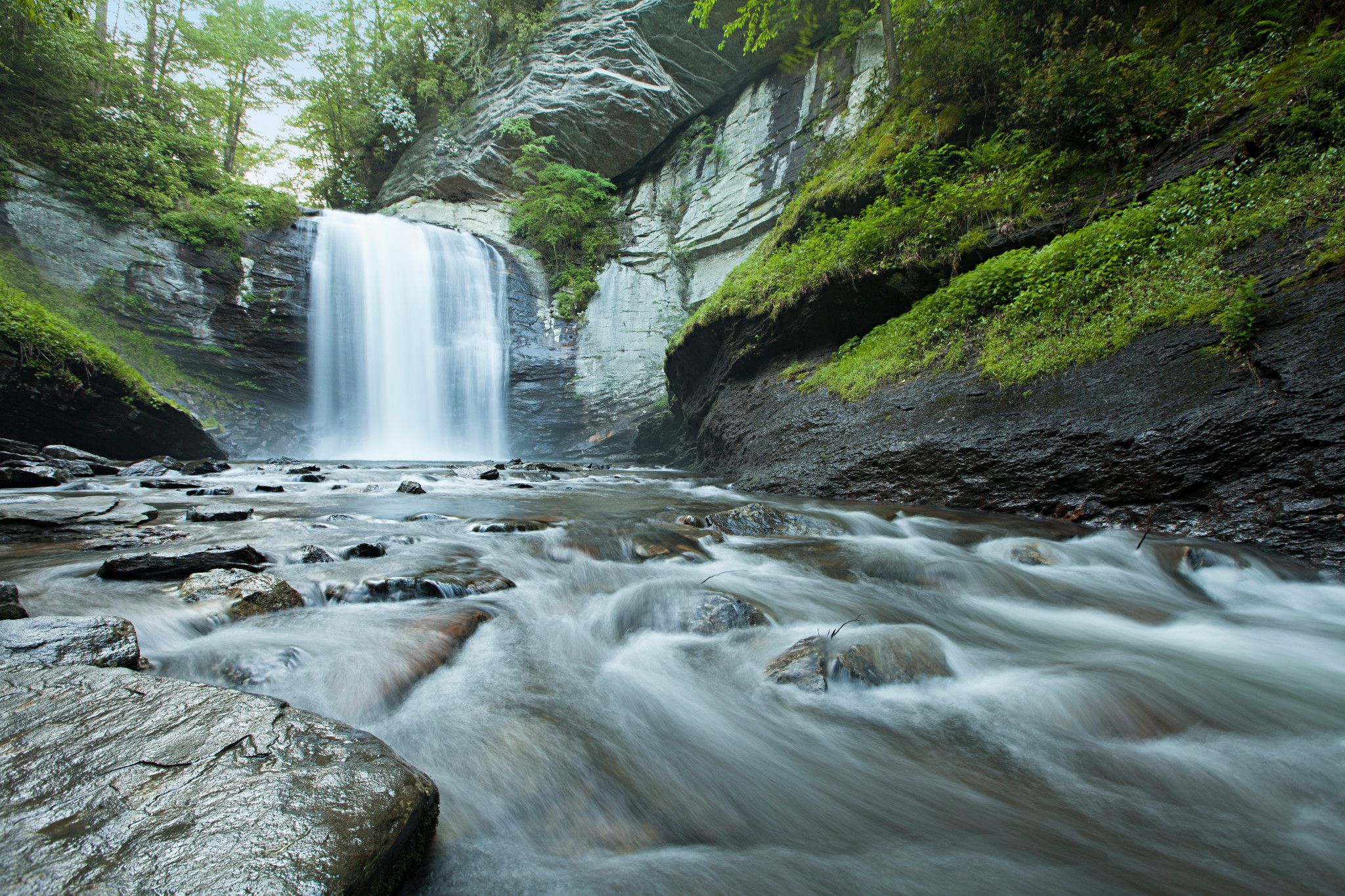
Returning to town, RADfest, a two-day celebration of art, music and culture in Asheville’s River Arts District, takes place November 8 and 9. This part of town was especially hard hit during the storm. With a roster of more than 350 artists from across the region, the festival features gallery exhibitions, studio open houses, live music, performance art and special culinary offerings. Restaurants such as The Bull and Beggar have bounced back, as well. Here, diners enjoy an eclectic menu with house favorites such as deviled bone marrow, escargot in their shells and pan-roasted cod. The Radical Asheville hotel has three noteworthy drinking and dining options. There’s After/Glow for coffee and breakfast bites, Golden Hour and its wood-fired grill, and the Arts District’s only rooftop bar, aptly named The Roof.
Set in the Historic Biltmore Village, the Grand Bohemian Lodge Asheville was devastated by flood waters. However, the AAA Four-Diamond boutique hotel is up and welcoming guests. A sister hotel of St. Augustine’s Casa Monica Resort, the hotel is part of the Kessler Collection and features a gorgeous lobby, spa, art gallery and Red Stag Grill serving whole broiled trout and 21-day aged flat iron steaks.
Of course, no visit to this portion of western North Carolina is complete without a few hours inside the 8,000 acres of manicured grounds of the Biltmore Estate. Daily guests are invited to experience America’s largest home, arguably as magnificent today as it was more than a century ago. How big is it? Imagine 175,000 square feet, 250 rooms, 25 bedrooms and 65 fireplaces. Self-guided tours spans three floors and the basement of the family home of George and Edith Vanderbilt. The house really shines come the holidays and its annual Christmas showcase, November 1 through January 4. Tickets come with a Vanderbilt-esque price, ranging from $130 to $155 per day for the House and Grounds tour. $400 gets one a 90-minute private tour of rarely accessed areas of the mansion.
CHARLOTTE
About a two-hour scenic drive east from Ashville is Charlotte, the state’s largest city and home to a collection of unique attractions and neighboring communities. When visiting here, use the Queen City as a home base but be open to traveling outside the urban center. Though, you don’t have to travel far. The Whitewater Center is the largest outdoor facility of its kind in the world. Featuring the globe’s largest manmade whitewater river and more than 1,000 acres of woodlands along the Catawba River, the Center is an outdoor enthusiast’s mecca with 40 miles of trails for mountain biking, whitewater channels for rafting and kayaking, treetop courses for ropes and zips lines, and a 70-acre dog park. There’s even a Treehouse Village with swinging bridges and hammocks. And in winter there are rinks for ice skating and curling.
For arts enthusiasts, there’s the NODA Arts District. An abbreviation of North Davidson Street, the neighborhood’s main drag, this part of town is dotted with murals, unusual shopping finds and eateries like the Artisan’s Palate, a gallery/bar/restaurant combination. Picture bacon-wrapped dates, smoked salmon, grilled shrimp and artichoke salads, pastry empanadas stuffed with chorizo and potato—it’s all good.
Charlotte and NASCAR are a match made in Southern sports heaven. The NASCAR Hall of Fame is one of the city’s signature attractions. Of course, there is a garage-worth’s of race cars on display. But the museum is also packed with interactive exhibits like the Pit Crew Challenge and race simulators—good stuff for kids and adult motorheads. Young minds in particular are the focus at the Discovery Place Kids, a museum that’s full of all sort of hands-on activities, daily dance parties, story time sessions, and things to climb up and slide down.
Standing more than 17 feet tall and adorned with 7,500 pieces of mirrored glass, The Firebird is hard to miss outside of the Bechtler Museum of Modern Art. The towering sculpture showcases the pioneering imagination and technique that characterize the work of artist Niki de Saint Phalle. It has become the iconic image of Charlotte for locals and visitors alike. The museum building is visually striking, too. In addition to its permanent collection, the Bechtler hosts numerous temporary exhibitions, such as Assembly Lines: Modernism and Machines. Featuring painting, sculpture, printmaking, photography, and generative art, the show presents works by artists including Margaret Bourke-White, Le Corbusier, Ivan Depeña, Kiki Kogelnik and Roy Lichtenstein, October 18 through February 2.
Before leaving Charlotte, you may want to time travel over to the biggest party since Camelot. The Carolina Renaissance Festival in Huntersville (Saturdays and Sundays through November 23) allows visitors to stroll through the village of Fairhaven, where history lives on with jousting knights, friendly dragons, fair maidens and an open-air artisan market. Feast on roast turkey legs, sausages on a stick, chocolate truffles and more. Rides include the “World’s Largest Rocking Horse” and Da Vinci’s Flying Machine, along with a petting zoo, archery ranges, and ax throwing. Gates open at 9:30 AM and sell-outs are routine.