Long before there was a Florida, there was a wedge of land just north of where the St. Johns River spills into the Atlantic Ocean. People have lived here for more than 5,000 years, Scratching out an existence eating oysters, hunting game and raising crops. It was first recognized as Fort George Island in the 1700s. Today, the island is part of the larger Timucuan Ecological and Historic Preserve, 46,000 acres of unspoiled coastal wetlands that begin only a few miles from Downtown Jax.
When You Visit
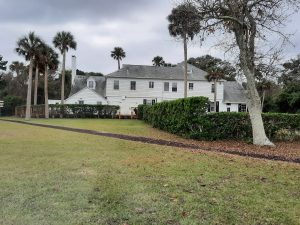
• The main attraction on the island is the Kingsley Plantation site, a collection of buildings and ruins that were part of an agricultural operation owned by Zephaniah Kingsley from 1813-1839. Guided tours inside the main house have been suspended due to the pandemic. However, visitors may still enter, as well as roam the expansive grounds that surround it.
• Admission to the Kingsley house and property is free. A small visitor center and gift shop are located in a building adjacent to the plantation house. Free audio tours are offered here, and also can be downloaded to your phone. Leashed dogs are welcome on the grounds.
• There is a three-mile hiking trail loop that runs through land that was a golf course up until the 1990s. The course was shuttered and nature has been allowed to take back the fairways and greens. Hints of the old course can be spotted here and there, but the entire property would be considered a hazard were one to play a round today.
• There’s a spot on the Fairway Loop hiking trail called Mount Cornelia. It is said to be one of the tallest sand dunes on the entire Eastern Seaboard. This hiking trail also features beautiful views of the marsh and the Fort George River. Mountain bikes are permitted. Large-tire bikes are recommended as the sandy terrain can swallow standard tires.
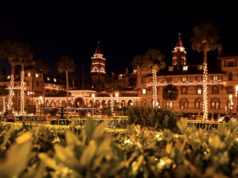
• The golf course’s 1928 clubhouse building was saved and renovated in 2003 as the Ribault Club, an elegant event space that is popular for weddings. Directly behind the club building, which is open to visitors Wednesday through Sunday, is a small boat ramp and canoe and kayak launch.
• Pack a picnic and enjoy lunch on the broad lawn that surrounds the Kingsley site. There are a few picnic tables, as well as shady spots in the grass. The view of the river is postcard pretty and particularly enjoyable during the cooler months of winter. Be mindful of ants. They are here and they will bite. Check the ground before tossing down your picnic blanket.
• The Sandollar restaurant is a Heckscher Drive waterfront joint that’s been around for decades. It sits a few hundred yards south of the turn into park. A stone’s throw away is the St. Johns River Ferry connecting to Mayport. Take a ride over ($8 for cars on weekends) for a bite at two other seafood favorites, Singleton’s Seafood Shack and Safe Harbor Seafood.
Must See
For as old as it is, the plantation house is in remarkable shape, especially considering its waterside location. Portions of the interior, including the furnished bedrooms, dining room and kitchen, are open to visitors daily, 9 AM to 5 PM. Of particular note are the original tabbystone floors, which are made from the same material as the plantation’s slave cabins. Little of the more than two dozen one- and two-room cabins still stands, save but for the foundations and some walls and fireplaces. At one point, as many as 80 slaves lived here. An overseer’s cabin has been restored by the Park Service. Easy-to-read historical markers detail the daily work r equired and harsh existence these people endured.
Don’t leave the island without driving past St. George Episcopal Church. Built in 1883, the Carpenter Gothic style house of worship was added to the National Register of Historic Places 20 years ago. It’s surrounded by a tangle of oaks trees and spindly palms and overlooks a lazy creek and unspoiled marshland. If serenity can be captured
in an image, it likely will look like this peaceful setting.

Believe It or Not
It can be hard to picture as you drive along the bumpy dirt roads and deep into the thick woods that cover the island, but in Kingsley’s time most of the island was cleared of trees to make room for crops like cotton. The oaks and pines have grown quite a bit in the past 200 years. The winding path and heavy canopy of limbs and leaves give the feeling one has entered a dark wilderness, a piece of Florida left over from another century. Enjoy the ride.