Women lawyers face a number of obstacles: stereotypes that they might be “too soft” to manage an aggressive negotiation or complex litigation; workplace sexual harassment; work-life balance; and a significant gender wage gap. But the issues go beyond less pay and fewer promotions. According to a 2018 American Bar Association survey, female lawyers—women of color, in particular—tend to have less access to prime job assignments; do more office paperwork; and be mistaken for janitors or court administrators far more often than their male counterparts. In fact, more than 50 percent of women respondents said they had fallen victim to mistaken identity, with others assuming them to be court reporters or custodial staff. One respondent said she was frequently asked if she was an administrative assistant—at her own firm, even after making partner.
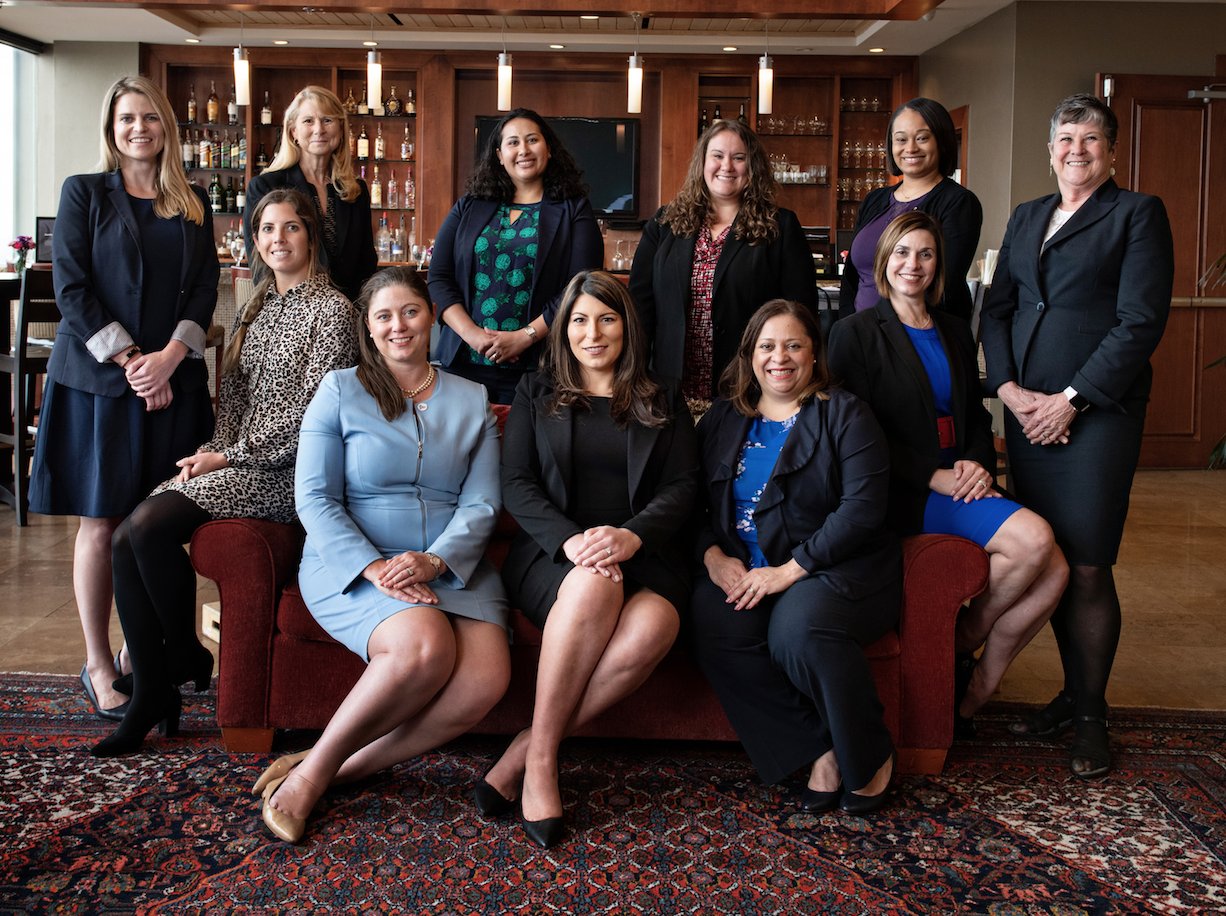
Locally, the Jacksonville Women Lawyers Association (JWLA)—a chapter of the Florida Association for Women Lawyers—aims to provide networking opportunities and other assistance to women attorneys, in order to help them thrive in their careers. “I think that there’s a false perception of what a lawyer looks like,” says JWLA president Jamie Karpman. “A lot of that comes from unconscious gender bias. You hear stories from women who were in some of the first admission classes to law school. They’d hear things like, ‘What are you doing? This is a man’s spot,’ from their classmates. In other cases, some male students would shuffle their feet in order to drown out the voices of the women when they spoke in class.”
Things have changed since then, but members of JWLA are quick to point out that there’s more work to be done. Groups like JWLA are sorely needed, says Karpman, to amplify the voices of women lawyers. In the 1980s, the group launched an annual judicial reception, allowing local female attorneys a chance to meet one-on-one with area judges. “There haven’t always been as many opportunities for women lawyers to go to court,” notes Karpman. “This allows them to have that face time.”
Last year’s Judicial Reception was held at TIAA Bank Field and was attended by more than 400 local legal professionals. The group also organizes networking receptions, plans luncheons focusing on gender equality and even lobbies both local and state government on the non-partisan issues that align with the chapter’s mission.
One of its current initiatives would see nursing lounges and lactation rooms opened in every courthouse in the state, to advance equality and promote access to justice for all those who have business before the court. “A few years ago, most courthouses did not have a space for nursing women—so women coming for jury duty, courthouse staff, witnesses, and others had no real options.” In 2017, a nursing lounge opened in the Duval County Courthouse, but the group continues to advocate for similar lounges in other parts of the state.
At the top of the group’s current agenda is to lobby for an adoption of a court rule that would require a continuation of a trial when necessary for parental leave purposes, in the absence of substantial prejudice to the opposing party. In other words, if a lawyer is due to give birth, or adopt a child, she or he should be granted a continuation for purposes of parental leave.
“This is a 2019 problem,” says Jennifer Shoaf Richardson, past president of JWLA and current president of FAWL. “This isn’t a tale from 20 years ago. As statewide president, I get these reports from all corners of the state—of women being denied a continuation, even when asking for purposes of childbirth or adoption. It happens more often than you might think.”
In the midst of the #MeToo and Time’s Up movements, the group is also actively working to educate those in the legal community about what constitutes sexual harassment and—often just as importantly—what doesn’t.
“We are doing some things that are outside the box,” says Richardson. “Over the summer, JWLA worked with the Women’s Center of Jacksonville to train those in the local legal community on how to be a proactive third-party bystander when encountering sexual harassment in the legal profession. If they saw sexual harassment taking place, how could they address it or help in some beneficial way? Unfortunately, it is a very fine line and our concern is that those in power might see the conversation and actually take a step back, by not having those important one-on-one conversations with women or choosing only men as their proteges, out of fear they could be accused of something. This is why the framing of the education is so important.”
Though their advocacy work continues, JWLA’s members agree that strides have been made. “I think that Jacksonville has an outstanding legal community,” says Karpman. “In fact, we have five area bar associations led by women right now. But we still have some work to do to develop as much top level diversity as other cities.”